People with disabilities represent a skilled and often underutilized talent pool. For employers looking to strengthen recruitment, improve retention, and build more inclusive workplaces, creating a disability talent pipeline can help turn inclusive hiring goals into a consistent, long-term workforce strategy.
At AbilityLinks, we connect employers with job seekers with disabilities and veterans who are actively searching for meaningful employment opportunities. This employer playbook explains how to build a disability talent pipeline, identify barriers in the hiring process, strengthen sourcing partnerships, support disability disclosure, and retain disabled talent over time.
Key Takeaways
- Building a disability talent pipeline is less about creating a brand-new program and more about reviewing your existing hiring process for gaps that can be closed with practical, targeted changes.
- Bias in traditional recruitment often appears through job descriptions, screening tools, application systems, and interview formats.
- Compliance with the ADA and Section 503 provides a useful legal foundation, but a strong disability talent pipeline goes beyond minimum requirements.
- Effective sourcing strategies combine disability-focused platforms like AbilityLinks with partnerships through Vocational Rehabilitation agencies, disability employment programs, colleges, and community organizations.
- Retention requires the same level of attention as recruitment. Employees with disabilities need clear accommodation processes, open communication channels, and advancement opportunities to stay and grow.

Alt text: Diverse group of professionals collaborating at a planning board in a modern office, including a wheelchair user.
Why Aren’t Companies Embracing Disabilities as Part of a Diverse and Talented Workforce?
Most employers are not opposed to hiring people with disabilities. The gap between intent and outcome is often a process problem, not a values problem.
Many organizations want to build diverse and talented teams, but their recruitment systems may not be designed with disability inclusion in mind. Job descriptions, screening tools, online applications, interview formats, and workplace culture can all create barriers before a qualified candidate has the chance to be fairly evaluated.
A strong disability talent pipeline helps employers move from good intentions to consistent action. It creates a repeatable process for finding, evaluating, hiring, supporting, and advancing people with disabilities.
Overcoming Biases in Traditional Recruitment Processes
Traditional recruitment processes often reflect a narrow view of what a “strong candidate” looks like. Employers may unintentionally favor candidates with continuous employment histories, standard resume formats, traditional communication styles, or interview behaviors that do not necessarily predict job performance.
Common recruitment barriers include:
- Credential-based screening that may disadvantage candidates whose career timeline includes gaps related to disability, medical treatment, caregiving, or rehabilitation.
- Physical requirement inflation, where job descriptions list lifting, standing, driving, or mobility requirements that are not truly essential to the role.
- Interview format assumptions, where eye contact, conversational fluency, or quick verbal responses are treated as signs of competence.
- ATS keyword filtering that may disadvantage candidates using nontraditional resume formats or assistive technology.
- Inaccessible applications that prevent candidates using screen readers, keyboard navigation, or other assistive tools from completing the process.
Addressing these barriers does not mean lowering standards. It means making sure the standards being used are actually connected to the essential functions of the job.
Shifting Corporate Culture Toward Genuine Inclusivity
A disability talent pipeline does not end when a candidate applies. Recruitment practices are only effective if the workplace culture supports employees with disabilities after they are hired.
Culture is shaped by how leadership talks about disability inclusion, how managers respond to accommodation requests, how HR protects confidentiality, and whether employees with disabilities have access to the same advancement opportunities as their peers.
Employers can begin shifting culture by:
- Using consistent, respectful language around disability.
- Allowing employees to lead on their own language preferences.
- Treating accommodation requests as a standard workplace process, not an exception.
- Including disability hiring in broader diversity, equity, inclusion, and workforce development goals.
- Making accessibility part of meetings, onboarding, training, technology, and internal communication.
- Encouraging managers to focus on performance, access, and support rather than assumptions.
When disability inclusion is treated as part of the organization’s normal hiring and retention strategy, employers are more likely to build a pipeline that lasts.
Understanding Regulatory Compliance and Disability Hiring Requirements
Compliance provides the legal foundation for disability hiring. It can also help employers identify gaps in their current recruitment and workplace practices.
The goal of a disability talent pipeline should not be limited to compliance, but employers do need to understand the basic legal frameworks that shape disability employment.
Meeting National and Local Legal Frameworks
The Americans with Disabilities Act is one of the primary federal laws governing disability employment in the United States. For covered employers, the ADA prohibits discrimination against qualified individuals with disabilities and requires reasonable accommodations unless doing so would create undue hardship.
Employers should also be aware of additional frameworks that may apply:
- Section 503 of the Rehabilitation Act applies to certain federal contractors and subcontractors and requires covered employers to take affirmative action to recruit, hire, promote, and retain individuals with disabilities.
- The Workforce Innovation and Opportunity Act helps shape how state Vocational Rehabilitation programs operate and how they work with employer partners.
- State and local laws may provide additional protections or apply to smaller employers.
Your HR and legal teams should understand which requirements apply to your organization. If there is uncertainty, that is an important gap to address before expanding a disability hiring strategy.
Creating Accessible Digital Infrastructure for Applicants
Digital accessibility is an important part of inclusive recruitment. If a careers page, application portal, or pre-employment assessment is not accessible, qualified candidates may be blocked before they can apply.
The Web Content Accessibility Guidelines provide widely recognized standards for making digital content more accessible.
At a minimum, employers should review whether their hiring technology:
- Can be navigated by keyboard without requiring a mouse.
- Works with screen readers and other assistive technology.
- Uses adequate color contrast for text and visual elements.
- Provides text alternatives for images and non-text content.
- Avoids unnecessary time limits on assessments.
- Allows candidates to request accommodations or alternative formats.
If you use an applicant tracking system or third-party application platform, ask the vendor for accessibility documentation. A basic accessibility review can help identify barriers before they affect candidates.
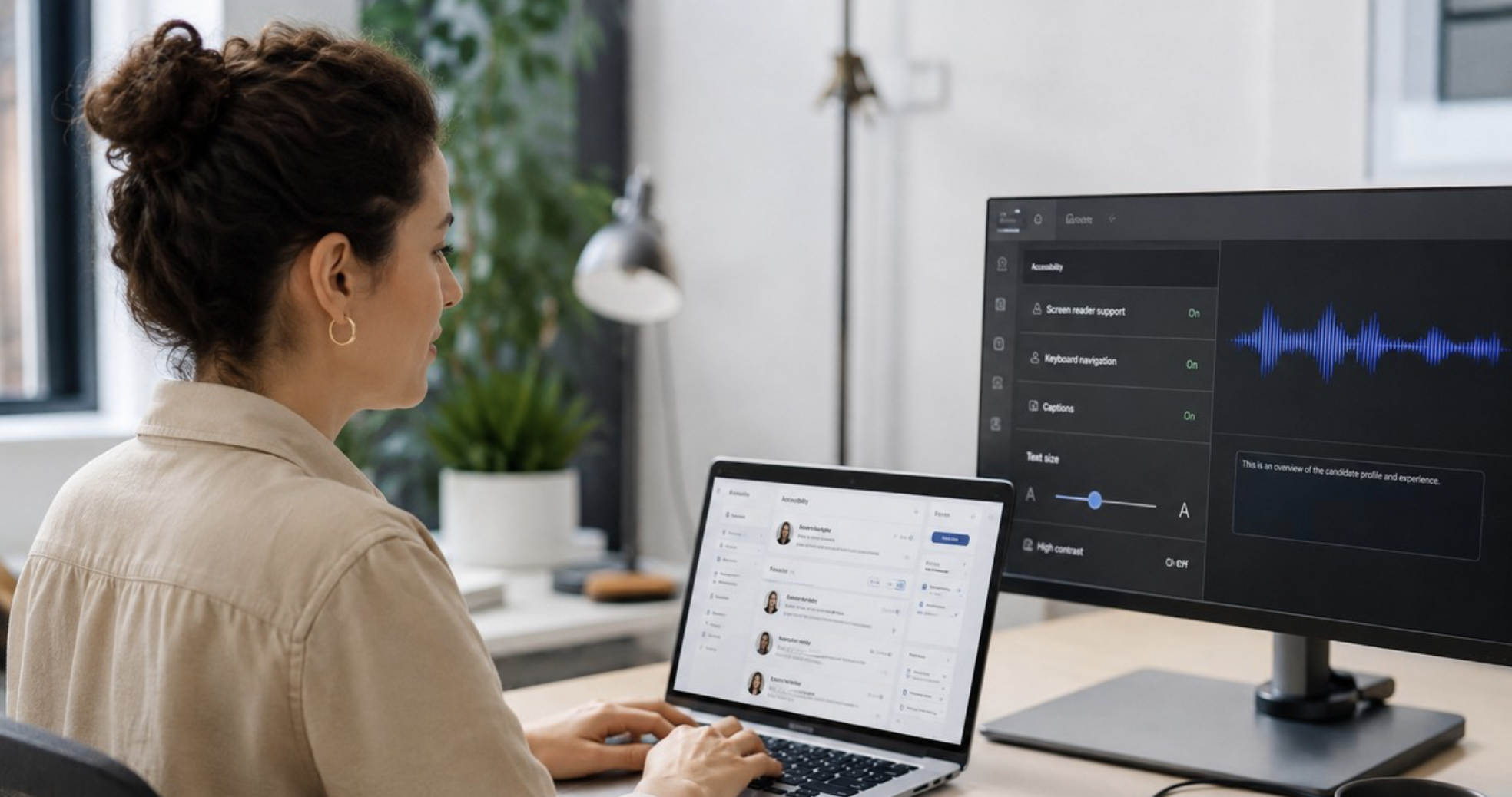
Alt text: Professional working at a desk with a laptop, accessibility settings on a monitor, and assistive technology nearby.
Strategic Sourcing: Best Places to Recruit Diversity Candidates and People With Disabilities
A strong sourcing strategy turns inclusive hiring goals into a consistent candidate pipeline.
General job boards may reach a broad audience, but they do not always reach candidates with disabilities directly. Employers who want to build a disability talent pipeline should use targeted sourcing channels designed to connect with this audience.
Utilizing Specialized Job Boards and Networks
Disability-focused job platforms give employers direct visibility with candidates who are actively looking for inclusive workplaces.
AbilityLinks was created for this purpose. Our platform connects employers with qualified job seekers with disabilities and veterans who are searching for meaningful employment opportunities. Posting open roles on AbilityLinks helps employers reach a targeted audience that general job boards may not reach.
Additional sourcing channels may include:
- LinkedIn groups and professional networks focused on disability employment.
- Disability-focused professional associations.
- University and community college disability services offices.
- Veteran employment programs.
- Workforce development organizations.
- Local disability service providers.
- Nonprofits focused on employment and job placement.
Each channel requires relationship-building, but these partnerships can help employers create a more reliable flow of qualified candidates over time.
Collaborating With Employment Programs for Disabled Adults
State Vocational Rehabilitation agencies are often underused employer resources. These programs work directly with individuals with disabilities to prepare them for employment, and many counselors are actively looking for employer partners.
Vocational Rehabilitation partnerships may help employers connect with candidates, understand accommodation options, and access additional support during onboarding.
Other programs worth building relationships with include:
- Supported employment programs.
- Disability-focused nonprofits and community organizations.
- School-to-work transition programs.
- College career centers and disability services offices.
- Veteran service organizations.
- Local workforce boards.
These partnerships can support both sides of the hiring process. Employers gain access to qualified candidates, and candidates gain access to employers who are intentionally building inclusive workplaces.
Fostering a Safe Culture Around Disability Disclosure in the Workplace
A disability talent pipeline cannot succeed if employees do not feel safe asking for support.
Many employees with disabilities choose not to disclose a disability because they are unsure how the information will be received, whether it will affect their career growth, or whether their privacy will be respected.
The goal is not to pressure employees to disclose. The goal is to create a workplace where employees know that if they need support, the process is clear, confidential, and handled professionally.
Creating Open and Confidential Communication Channels
Employees are more likely to disclose when they trust the process. That trust is built over time through consistent action from HR, managers, and leadership.
Employers can support safer disclosure by:
- Training managers on how to respond appropriately when an employee discloses a disability or requests support.
- Keeping disability-related information confidential.
- Separating accommodation requests from performance evaluations.
- Making accommodation policies easy to find.
- Including accommodation information in onboarding materials.
- Providing confidential or anonymous feedback options.
- Following up respectfully after accommodations are implemented.
When employees see that requests are handled professionally, they are more likely to seek support early instead of waiting until a barrier affects performance or retention.
Implementing Accommodations That Support Disclosure
The accommodation process can either encourage or discourage disclosure.
If the process is slow, confusing, inconsistent, or overly burdensome, employees may avoid asking for what they need. If the process is clear, respectful, and timely, employees are more likely to use it.
Employers can improve the accommodation process by:
- Responding to requests promptly.
- Engaging in the reasonable accommodation interactive process when needed.
- Avoiding unnecessary documentation requirements.
- Keeping accommodation details confidential.
- Training managers to focus on access and job performance.
- Checking in after an accommodation is in place to confirm that it is working.
Accommodations should be viewed as practical tools that help employees perform essential job functions, not as special treatment or exceptions.
Retaining and Advancing Disabled Talent Within Your Organization
Recruitment brings candidates into the organization. Retention and advancement determine whether the pipeline is sustainable.
Employers that invest in disability recruitment without also investing in retention may see turnover that weakens the long-term impact of their hiring efforts.
A strong disability talent pipeline should include support for onboarding, accommodations, mentorship, career growth, and advancement.
Designing Mentorship Programs for Professional Growth
Mentorship can be a valuable tool for retaining and developing employees with disabilities.
A mentor can help a new employee understand workplace culture, navigate internal systems, set goals, and identify opportunities for growth. Senior sponsors can also help employees access advancement opportunities and visibility within the organization.
When building mentorship programs, employers should:
- Design the program for accessibility from the beginning.
- Offer virtual and in-person participation options when possible.
- Provide both peer mentorship and senior sponsorship.
- Keep the focus on professional development and career goals.
- Ensure employees with disabilities have access to the same leadership development opportunities as their peers.
Mentorship should not be centered only on disability. Employees with disabilities want the same opportunities for growth, skill-building, leadership, and advancement as other employees.
Measuring the Impact of Inclusive Pipeline Strategies
A disability talent pipeline should be measured over time. Without data, it is difficult to know where candidates are progressing, where they are dropping out, and whether retention and advancement outcomes are improving.
Employers may consider tracking:
- Application rates from disability-focused sourcing channels.
- Interview and hire rates for candidates who have disclosed a disability.
- Accommodation request volume and resolution time.
- Retention rates for employees with disabilities.
- Promotion and advancement rates.
- Candidate feedback on the accessibility of the hiring process.
- Disclosure rates over time, when collected appropriately and confidentially.
These metrics can help leadership understand whether the pipeline is working and where improvements are needed. The goal is to identify barriers, improve processes, and make sure disability inclusion is producing real outcomes across recruitment, retention, and advancement.

Alt text: Two professionals having a workplace conversation at a desk, including a wheelchair user, with a laptop nearby.
Frequently Asked Questions About Building a Disability Talent Pipeline
What is a disability talent pipeline?
A disability talent pipeline is a long-term recruitment and retention strategy focused on attracting, hiring, supporting, and advancing people with disabilities. It includes accessible hiring practices, targeted sourcing partnerships, accommodation processes, and career development opportunities.
Why should employers build a disability talent pipeline?
Employers should build a disability talent pipeline to expand access to qualified candidates, reduce unnecessary hiring barriers, improve retention, and strengthen workplace inclusion. A pipeline also helps employers move beyond one-time hiring efforts and create a more consistent approach to disability employment.
Where can employers find candidates with disabilities?
Employers can find candidates with disabilities through disability-focused job boards like AbilityLinks, Vocational Rehabilitation agencies, disability service organizations, college disability services offices, veteran employment programs, and workforce development partners.
How does AbilityLinks support disability hiring?
AbilityLinks connects employers with job seekers with disabilities and veterans who are actively looking for employment opportunities. Through an AbilityLinks sponsorship or employer partnership, organizations can share open roles with a targeted audience and strengthen their disability hiring efforts.
How can employers make recruitment more accessible?
Employers can make recruitment more accessible by reviewing job descriptions, checking application platforms for accessibility, offering interview accommodations, training hiring managers, and making sure hiring tools work with assistive technology.
What should employers know about disability disclosure?
Employers should not pressure candidates or employees to disclose a disability. Instead, they should create a clear, confidential, and respectful process for requesting support. Employees are more likely to disclose when they trust that the information will be handled professionally.
How can employers retain employees with disabilities?
Employers can retain employees with disabilities by providing effective accommodations, training managers, offering mentorship and advancement opportunities, maintaining open communication, and regularly reviewing whether workplace systems are accessible and inclusive.
Are there tax incentives for hiring people with disabilities?
Some employers may be eligible for the Work Opportunity Tax Credit when hiring individuals from certain target groups, including qualified vocational rehabilitation referrals. Employers should consult their finance, HR, or tax professionals to determine eligibility.
Ready to Build a Stronger Disability Talent Pipeline?
Building a disability talent pipeline takes intention, consistency, and the right partnerships. Employers do not need to have every system perfected before they begin. They can start by removing unnecessary barriers, improving accessibility, and connecting with candidates through trusted disability employment resources.
AbilityLinks helps employers reach job seekers with disabilities and veterans who are actively looking for meaningful employment opportunities.
Through an AbilityLinks sponsorship or employer partnership, organizations can share open roles with a targeted audience, strengthen inclusive recruitment efforts, and show a commitment to building a more accessible workforce.
To learn more about becoming an AbilityLinks employer partner, visit AbilityLinks.org or contact our team.