Finding the right job can be challenging. Finding an employer that will genuinely support your needs can make the search feel even more overwhelming.
Fortunately, disability-friendly employers can be found across nearly every industry. Knowing where to search, what to look for, and how to evaluate an employer can help you identify opportunities where you can succeed.
AbilityLinks makes this process easier by connecting job seekers with disabilities and veterans to employers that have taken deliberate steps toward inclusive recruitment.

Alt text: Disabled woman veteran with a prosthetic leg working on a laptop and writing in a notebook in a modern office.
Key Takeaways
- Disability-friendly jobs provide an accessible hiring process, reasonable accommodation support, and an inclusive workplace culture.
- The right job depends on your skills, experience, goals, preferred work environment, and individual accommodation needs.
- You can research an employer’s commitment to accessibility before submitting an application.
- You are not required to disclose a disability when applying for a job unless you choose to do so.
- AbilityLinks is completely free for job seekers with disabilities and veterans.
What Makes a Job Disability-Friendly?
A disability-friendly job is not defined by a specific title, industry, or work arrangement. It is created through a combination of accessible hiring practices, meaningful accommodation support, and a workplace culture that follows through on its inclusion commitments.
An Accessible Hiring and Application Process
The hiring process can provide important clues about an employer’s approach to accessibility.
Look for employers that:
- Use application systems compatible with screen readers and keyboard navigation
- Provide a clear way to request an interview accommodation
- Offer reasonable time limits for assessments
- Provide accessible interview locations or virtual interview options
- Avoid interview practices that unnecessarily disadvantage different communication styles
A job posting may include instructions for requesting an accommodation. You can also contact the employer’s human resources or recruiting department if the process presents an accessibility barrier.
Accommodations That Support Long-Term Success
Reasonable accommodations help qualified employees perform their essential job responsibilities. Depending on the position and the employee’s needs, accommodations may include:
- Modified equipment or an accessible workstation
- Flexible scheduling
- Remote or hybrid work arrangements
- Adjusted training materials
- Alternative communication formats
- Additional or modified break schedules
- Changes to nonessential workplace policies or procedures
A supportive employer approaches accommodation requests professionally and works with employees to identify effective solutions.
A Culture That Follows Through
Written policies are important, but an employer’s everyday culture matters just as much.
An inclusive workplace should respect employees’ privacy, respond appropriately to accommodation requests, and provide equitable access to training, advancement, leadership opportunities, and workplace activities.
Specific signs of an inclusive culture may include employee resource groups, disability-inclusive benefits, accessible offices and technology, and visible disability representation throughout the organization.
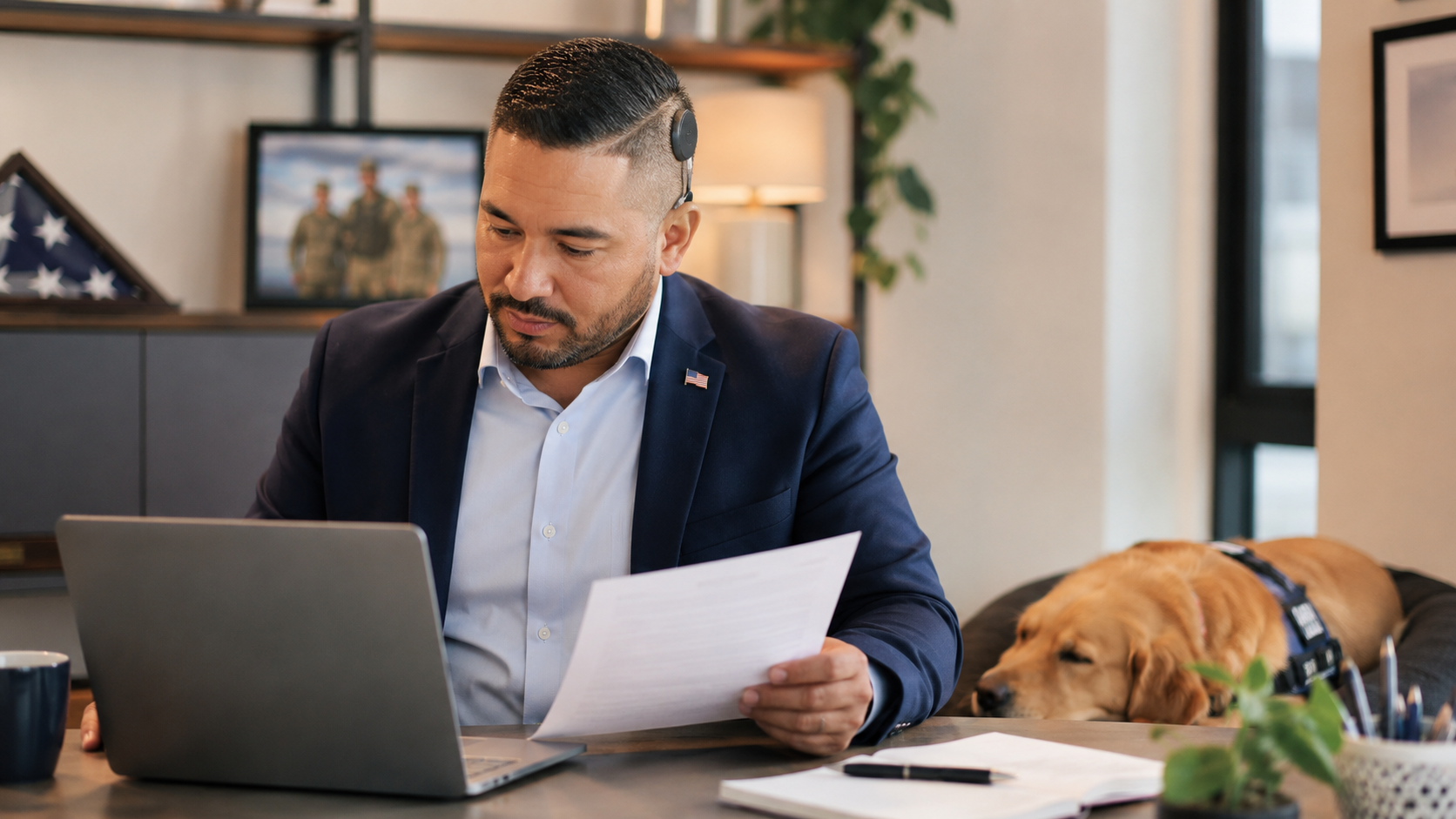
Alt text: Disabled veteran with a hearing device reviewing job materials beside his service dog in a professional home office.
Finding the Right Job for You
There is no single best type of job for people with disabilities. The right opportunity depends on your abilities, experience, interests, career goals, work preferences, and accommodation needs.
Remote and hybrid positions can reduce transportation barriers and may make it easier to manage personal or medical needs. These opportunities are available in fields such as customer service, administration, marketing, finance, technology, healthcare, education, and professional services.
In-person positions can also be a strong option, particularly when an employer provides accessible facilities, modified workstations, flexible scheduling, or other appropriate accommodations.
Job seekers entering the workforce may find opportunities in customer service, retail, hospitality, administration, and other entry-level fields. Experienced candidates can pursue skilled and professional careers across industries such as technology, healthcare, engineering, finance, communications, manufacturing, and management.
Part-time, flexible-schedule, contract, and freelance opportunities may also provide alternatives when a traditional full-time schedule does not align with your needs.
The goal is not to limit yourself to a particular category. It is to find a position, team, and workplace environment that match what you bring to the table and what you need to do your best work.
Where to Find Disability-Friendly Jobs Online
Disability-focused job boards can make it easier to identify employers that are actively interested in inclusive recruitment.
AbilityLinks connects job seekers with disabilities and veterans directly to employers that have chosen to recruit through a platform centered on disability inclusion. While participation does not independently verify every aspect of an employer’s accessibility, it demonstrates that the organization has taken a deliberate step toward reaching candidates with disabilities and veterans.
You can also use general job boards by combining the name of your desired position with search terms such as:
- Disability inclusive
- Reasonable accommodations
- Accessible workplace
- Equal opportunity employer
- Remote or hybrid
- Flexible schedule
State Vocational Rehabilitation agencies may provide job placement assistance, career counseling, training support, assistive technology, and other employment services. Local disability organizations, workforce development agencies, and veteran service organizations may also maintain job listings or host inclusive hiring events.
How to Research an Employer Before Applying
Before submitting an application, spend a few minutes researching the employer’s approach to accessibility and disability inclusion.
Review the Employer’s Careers Page
Look for information about reasonable accommodations, accessibility, equal employment opportunities, employee resource groups, and workplace inclusion.
A detailed accommodation process is generally more meaningful than a broad statement saying the company values diversity.
Read Employee Reviews Carefully
Employee review websites may provide additional insight into an organization’s management style and workplace culture.
Search reviews for terms such as:
- Disability
- Accessibility
- Accommodation
- Flexible scheduling
- Remote work
- Inclusive management
Remember that individual reviews represent personal experiences and may not reflect every department or location.
Look for Specific Commitments
Signs of a meaningful commitment may include:
- A clearly identified accommodation contact
- Disability-focused employee resource groups
- Accessible technology or workplace initiatives
- Partnerships with disability employment organizations
- Disability inclusion training
- Public accessibility goals
- Disability representation in leadership
You may not find every item at every inclusive employer. However, specific information can help you distinguish meaningful action from general statements.
Preparing for Your Job Search
A strong job search begins with a resume that clearly communicates your skills, achievements, education, and professional experience.
Focus on the value you can provide to an employer. Whenever possible, include measurable accomplishments rather than listing job responsibilities alone.
For example, instead of writing:
“Responsible for responding to customer questions.”
You might write:
“Responded to approximately 40 customer inquiries each day while maintaining a 95% customer satisfaction rating.”
Your resume does not need to mention your disability unless you personally choose to include it.
Understanding Disability Disclosure
Disclosing a disability is a personal decision. You are generally not required to disclose a disability during the application or interview process.
Some job seekers disclose early because they need an accommodation to complete an application or participate in an interview. Others wait until they receive an offer, begin employment, or determine that an accommodation is needed. Some job seekers choose not to disclose at all.
There is no single disclosure timeline that is right for everyone.
When requesting an interview accommodation, you generally only need to explain the adjustment you need to participate in the process. You do not need to share every detail about your disability or medical history.
Possible interview accommodations may include:
- An accessible interview location
- A virtual interview
- Additional time for an assessment
- A sign language interpreter
- Interview questions provided in an accessible format
- Permission to use assistive technology
- A modified communication format

Alt text: Diverse group of professionals, including disabled veterans and employees with mobility and limb differences, collaborating around a conference table.
How AbilityLinks Supports Your Job Search
AbilityLinks connects job seekers with disabilities and veterans to employers interested in building more inclusive workplaces.
Creating a free AbilityLinks job seeker profile allows you to:
- Search disability-friendly jobs from employers across the country
- Explore remote, hybrid, and in-person opportunities
- Upload your resume and highlight your experience
- Make your qualifications available to participating employers
- Access resume, interview, and career preparation resources
- Learn about hiring events and employment opportunities
AbilityLinks is completely free for job seekers.
Start Your Search Today
You deserve the opportunity to pursue a career that recognizes your skills, experience, and potential.
Explore current opportunities, create a free profile, and connect with employers recruiting job seekers with disabilities and veterans through AbilityLinks.
Browse available jobs: https://abilitylinks.org/jobs
Frequently Asked Questions
How do I know whether an employer is disability-friendly?
Look for accessibility statements, reasonable accommodation information, inclusive benefits, disability-focused employee resource groups, and evidence of accessible hiring practices. An employer recruiting through a disability-focused platform such as AbilityLinks has also taken a deliberate step toward reaching candidates with disabilities.
Do I have to disclose my disability when applying for a job?
No. Disability disclosure is generally your choice. You may disclose at any stage of the hiring or employment process, or not at all, unless you need to request an accommodation.
Can I request an accommodation for a job interview?
Yes. Applicants may request reasonable accommodations that allow them to participate in the hiring process. Contact the employer’s recruiter or human resources department and explain the adjustment you need.
Are remote jobs easier to find for people with disabilities?
Remote opportunities have expanded across many industries and may reduce transportation or workplace accessibility barriers. However, the best work arrangement depends on your individual needs, skills, preferences, and the responsibilities of the position.
Does AbilityLinks serve veterans?
Yes. AbilityLinks connects both job seekers with disabilities and veterans to employers interested in inclusive recruitment.
Is AbilityLinks free for job seekers?
Yes. Creating a profile, browsing available jobs, and accessing AbilityLinks career resources are completely free for job seekers.